

How to Choose Korean Sunscreen: Mineral, Chemical, or Hybrid?
Korean sunscreens can generally be divided into three categories, each with its own pros and cons:
Three Types of Sunscreen
- Mineral (physical)
- Pros
- Relatively friendly to sensitive skin
- Possible drawbacks
- May leave a white cast and feel heavy
- Chemical
- Pros
- Lightweight texture, no white cast
- Possible drawbacks
- Some people may find it stings their eyes
- Hybrid
- Pros
- Balances texture and stability
- Possible drawbacks
- Depends on the specific formula
| Type | Pros | Possible drawbacks |
|---|---|---|
| Mineral (physical) | Relatively friendly to sensitive skin | May leave a white cast and feel heavy |
| Chemical | Lightweight texture, no white cast | Some people may find it stings their eyes |
| Hybrid | Balances texture and stability | Depends on the specific formula |
Popular sunscreens in the catalog
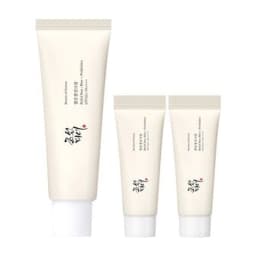 조선미녀맑은쌀 선크림 50ml
 Round Lab자작나무 수분 선크림
 스킨1004마다가스카르 센텔라 에어핏 선크림 라이트 50ml
0
Don’t treat “mineral = gentler, chemical = more irritating” as an ironclad rule; the specific formula and your personal tolerance around the eyes matter more. Mineral sunscreens mainly rely on zinc oxide (ZINC OXIDE) and/or titanium dioxide (TITANIUM DIOXIDE). They’re usually more likely to leave a white cast and feel drying, and may also suit people who want to avoid some organic filters. Common filters in chemical sunscreens include Uvinul A Plus (DIETHYLAMINO HYDROXYBENZOYL HEXYL BENZOATE) and Tinosorb S (BEMOTRIZINOL). Their textures are often lighter, but different products may still sting your eyes or not feel comfortable on your skin. Hybrid sunscreens use filters from both categories; that doesn’t automatically make them “stronger” or “gentler.”
A practical way to choose: first check whether it offers broad-spectrum protection and look at the SPF and PA ratings, then choose a texture you’re willing to apply in a sufficient amount and reapply when you’re outdoors. If you’re worried about a white cast, you can try a chemical or hybrid sunscreen first; if you prefer mineral sunscreens, pay attention to the tint and any drying feel. When trying a new sunscreen for the first time, test it on a small area, and if the eye area feels uncomfortable, avoid the eyelids and switch to another product.