
This page is part of Gloshell’s Coupang Partners activity, and Gloshell receives a set commission on purchases made through it.
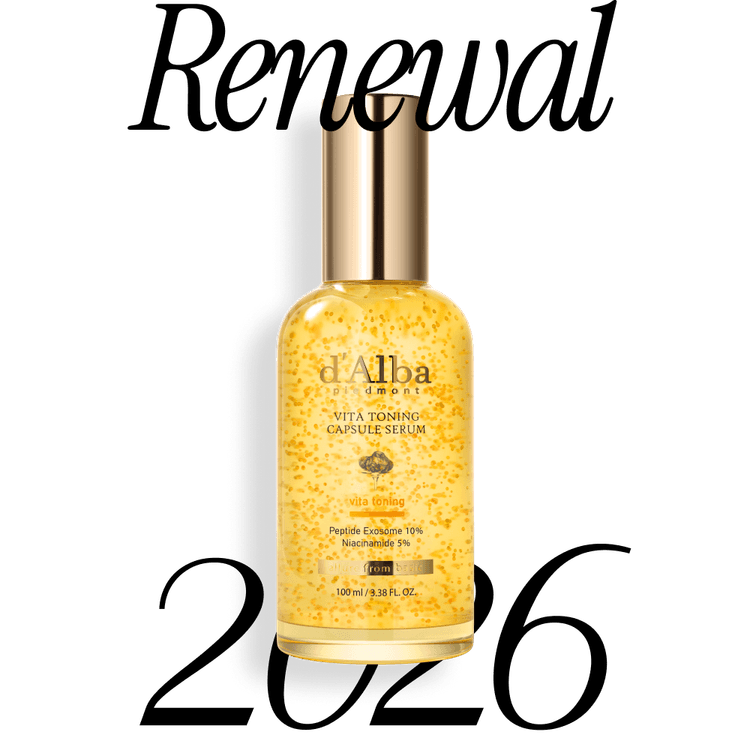


What the ingredients say
Read from the label order, stated amounts and each ingredient’s clinical evidence
Niacinamide, with clinical evidence for dark spots·oiliness, is in at the amount studies used (5%).
Adenosine, with clinical evidence for lines, is in at the MFDS notified amount for wrinkle care (0.04%).
- fragrance
- 4 labelled fragrance allergens
MFDS functional cosmetic filing
Filed with Korea's MFDS as a brightening·wrinkle care functional cosmetic (2026-03). Its efficacy ingredient and amount are those the MFDS notice names.
Best-supported ingredient per concern
- DrynessGlycerinevidence B+at least 5% · study amount
- Skin barrierGlycerinevidence Bat least 5% · study amount
- Dark spotsNiacinamideevidence B5% stated · study amount
- OilinessNiacinamideevidence B-5% stated · study amount
- BlemishesNiacinamideevidence B-5% stated · study amount
- LinesAdenosineevidence B-MFDS wrinkle care amount
Evidence-graded ingredients and how much is in
Listed before an ingredient whose amount is known, so it holds at least 5% — at or above what studies used (3–10%).
Dryness B+ · Skin barrier B
The label states 5% — the amount studies used (2–5%).
Dark spots B · Oiliness B- · Skin barrier B- · Blemishes B- · Pores C · Lines C
Filed with Korea's MFDS as a wrinkle care functional cosmetic, so it holds the notified amount (0.04%).
Lines B-
No amount is stated, and studies name no single amount. It sits after the 1% line (usually 1% or less).
Skin barrier B · Dryness B
No amount is stated, and studies name no single amount. It sits after the 1% line (usually 1% or less).
Dryness C · Skin barrier D
4 more evidence-graded ingredients
The label states 0.01% — less than studies used (1–5%).
Skin barrier B+ · Dryness C
The label states 0.0001% — under a hundredth of what studies used (10–20%).
Dark spots B+ · Lines B · Firmness C
The label states 0.00005% — under a hundredth of what studies used (1–5%).
Blemishes B · Dark spots C
The label states 0.00000004% — under a hundredth of what studies used (0.5–1%).
Lines D
Amounts on the label
- Hippophae Rhamnoides Water70%1% or more
- Niacinamidein the name5%1% or more
- Hippophae Rhamnoides Oil0.03%trace (under 0.1%)
- Panthenol0.01%trace (under 0.1%)
- Ascorbic Acid0.0001%trace (under 0.1%)
- Sodium Ascorbyl Phosphate0.00005%trace (under 0.1%)
- Hippophae Rhamnoides Fruit OIL0.0000001%trace (under 0.1%)
- Tocopherol0.00000004%trace (under 0.1%)
- Menadione0.00000001%trace (under 0.1%)
Korean law requires a product to state the amount of any ingredient in its name.
How this was read
Labels list ingredients above 1% from most to least, then those at 1% or less in any order. A product filed with Korea's MFDS as functional is read as holding the notified amount of its efficacy ingredient when the label carries only one for that effect, and anything listed before an ingredient of known amount as holding at least that much. Amounts in the product name or official description are used only where the label order allows them. Where no amount is stated, the chance of reaching the study amount comes from other products that state the same ingredient at the same place on their labels. Evidence grades were set by reading each ingredient's studies.
- A
- several randomised trials or a meta-analysis
- B
- one or two randomised trials
- C
- uncontrolled or multi-ingredient studies
- D
- lab work or a record only
A reading of ingredient evidence and the label, not a guarantee that this product works.
Ingredients
Full ingredient list as published on the official product page, in descending order of content.
All 62 ingredients at a glance
Colours follow each ingredient’s use (CosIng functions); the bar counts names. Not amounts, not a safety score.
Hippophae Rhamnoides Water695,884ppm, Aqua, Glycerin, Niacinamide50,000ppm, 1,2-Hexanediol, Isopentyldiol, Caprylic/Capric/Succinic Triglyceride, Acrylates/C10-30 Alkyl Acrylate Crosspolymer, Dipeptide-15, Caprylic/Capric Triglyceride, Estimated 1% or less from hereParfum, Butylene Glycol, Tuber Magnatum Extract, Xanthan GUM, Castor OIL/Ipdi Copolymer, Arginine, Sparassis Crispa Extract, Adenosine, Hippophae Rhamnoides Oil300ppm, Isononyl Isononanoate, Panthenol100ppm, Lavandula Angustifolia (Lavender) Flower Extract, Chamomilla Recutita (Matricaria) Flower Extract, Borago Officinalis Extract, Centaurea Cyanus Flower, Salvia Sclarea Extract, Hyacinthus Orientalis Extract, Macadamia Ternifolia Seed OIL, Glutathione, Ethylhexylglycerin, Dipropylene Glycol, Polyglutamic Acid, Brassica Campestris (Rapeseed) Sterols, Cholesterol, Phytosteryl/Behenyl/Octyldodecyl Lauroyl Glutamate, Polyglyceryl-10 Oleate, Hydrogenated Lecithin, Ascorbic Acid1,000ppb, Diospyros Kaki Fruit, Centella Asiatica Extract, Oryza Sativa (Rice) Extract, Artemisia Princeps Extract, Sodium Ascorbyl Phosphate0.5ppm, Potassium Cetyl Phosphate, Silica Dimethyl Silylate, Ceramide NP, Phytosterols, Disodium Edta, Dextrin Palmitate, Oenothera Biennis OIL, Glycine Soja OIL, Hippophae Rhamnoides Fruit OIL0.001ppm, Persea Gratissima OIL, Tocopherol0.0004ppm, Camellia Japonica Seed OIL, Menadione0.0001ppm, Olea Europaea Fruit OIL, Helianthus Annuus Seed OIL, Citral⁎, Limonene⁎, Hexyl Cinnamal⁎, Linalool⁎
Tap a name to see what it does and the evidence
Declared fragrance allergens
The label marks these as fragrance allergens that must be declared. They are not impurities, and most people do not react to them.
Citral · Limonene · Hexyl Cinnamal · Linalool