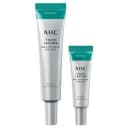
This page is part of Gloshell’s Coupang Partners activity, and Gloshell receives a set commission on purchases made through it.



What the ingredients say
Read from the label order, stated amounts and each ingredient’s clinical evidence
Niacinamide, with clinical evidence for dark spots·skin barrier, is in at the MFDS notified amount for brightening (2–5%).
Adenosine, with clinical evidence for lines, is in at the MFDS notified amount for wrinkle care (0.04%).
Asiaticoside, which the product is named after, is present at only 0.039%.
Madecassic Acid, which the product is named after, is present at only 0.033%.
- fragrance
- 5 labelled fragrance allergens
MFDS functional cosmetic filing
Filed with Korea's MFDS as a brightening·wrinkle care functional cosmetic (2022-11). Its efficacy ingredient and amount are those the MFDS notice names.
Best-supported ingredient per concern
- Dark spotsNiacinamideevidence BMFDS brightening amount
- Skin barrierNiacinamideevidence B-MFDS brightening amount
- OilinessNiacinamideevidence B-MFDS brightening amount
- BlemishesNiacinamideevidence B-MFDS brightening amount
- LinesAdenosineevidence B-MFDS wrinkle care amount
- DrynessGlycerinevidence B+likely enough
Evidence-graded ingredients and how much is in
Filed with Korea's MFDS as a brightening functional cosmetic, so it holds the notified amount (2–5%).
Dark spots B · Oiliness B- · Skin barrier B- · Blemishes B- · Pores C · Lines C
Filed with Korea's MFDS as a wrinkle care functional cosmetic, so it holds the notified amount (0.04%).
Lines B-
No amount is stated. Judging by products that state an evidence-graded ingredient at this place on the label, the chance it reaches the amount studies used is about 68%.
Dryness B+ · Skin barrier B
No amount is stated. Judging by products that state an evidence-graded ingredient at this place on the label, the chance it reaches the amount studies used is about 61%.
Skin barrier B · Dryness B-
The label states 0.039% — less than studies used (about 0.1%).
Skin barrier C
6 more evidence-graded ingredients
No amount is stated. Judging by 85 products that state it at this place on the label, the chance it reaches the amount studies used is about 11%.
Skin barrier B+ · Dryness C
No amount is stated. Judging by 175 products that state it at this place on the label, the chance it reaches the amount studies used is about 12%.
Dryness B · Lines D
No amount is stated, and studies name no single amount. It sits after the 1% line (usually 1% or less).
Lines B
No amount is stated. Judging by products that state an evidence-graded ingredient at this place on the label, the chance it reaches the amount studies used is about 5%.
Skin barrier D
No amount is stated, and studies name no single amount. It sits after the 1% line (usually 1% or less).
Lines D
No amount is stated. Judging by 89 products that state it at this place on the label, the chance it reaches the amount studies used is about 3%.
Lines D · Firmness D
Amounts on the label
- Asiaticosidein the name0.039%trace (under 0.1%)
- Madecassic Acidin the name0.033%trace (under 0.1%)
- Asiatic Acidin the name0.026%trace (under 0.1%)
- Centella Asiatica Extractin the name0.002%trace (under 0.1%)
Korean law requires a product to state the amount of any ingredient in its name.
How this was read
Labels list ingredients above 1% from most to least, then those at 1% or less in any order. A product filed with Korea's MFDS as functional is read as holding the notified amount of its efficacy ingredient when the label carries only one for that effect, and anything listed before an ingredient of known amount as holding at least that much. Amounts in the product name or official description are used only where the label order allows them. Where no amount is stated, the chance of reaching the study amount comes from other products that state the same ingredient at the same place on their labels. Evidence grades were set by reading each ingredient's studies.
- A
- several randomised trials or a meta-analysis
- B
- one or two randomised trials
- C
- uncontrolled or multi-ingredient studies
- D
- lab work or a record only
A reading of ingredient evidence and the label, not a guarantee that this product works.
Ingredients
Full ingredient list as published on the official product page, in descending order of content.
All 55 ingredients at a glance
Colours follow each ingredient’s use (CosIng functions); the bar counts names. Not amounts, not a safety score.
Aloe Barbadensis Leaf Extract, Glycerin, Caprylic/Capric Triglyceride, Cetearyl Alcohol, Dipropylene Glycol, Aqua, Niacinamide, Glyceryl Stearate, PEG-3 Stearate, Sorbitan Stearate, Hydrogenated Polydecene, Betaine, Dimethicone, Macadamia Ternifolia Seed Oil, Vitis Vinifera Seed OIL, 1,2-Hexanediol, Estimated 1% or less from hereCarbomer, Arginine, Butylene Glycol, Caprylyl Glycol, Illicium Verum Fruit Extract, Allantoin, Panthenol, Tocopheryl Acetate, Glyceryl Acrylate/Acrylic Acid Copolymer, Zanthoxylum Piperitum OIL, Pulsatilla Koreana Extract, Usnea Barbata Extract, Disodium Edta, Adenosine, Asiaticoside390ppm, Madecassic Acid330ppm, Leontopodium Alpinum Callus Culture Extract, Asiatic Acid260ppm, Propylene Glycol, Sodium Hyaluronate, Solanum Melongena Fruit Juice, Punica Granatum Fruit Extract, Ficus Carica (Fig) Fruit Extract, Morus Alba Fruit Extract, Ginkgo Biloba Leaf, Centella Asiatica Extract20ppm, Ethylhexylglycerin, Acetyl Hexapeptide-8, Copper Tripeptide-1, Oligopeptide-29, Oligopeptide-32, Palmitoyl Pentapeptide-4, Parfum, Geraniol⁎, Butylphenyl Methylpropional⁎, Linalool⁎, Benzyl Benzoate⁎, Hexyl Cinnamal⁎, Limonene⁎
Tap a name to see what it does and the evidence
Declared fragrance allergens
The label marks these as fragrance allergens that must be declared. They are not impurities, and most people do not react to them.
Geraniol · Butylphenyl Methylpropional · Linalool · Benzyl Benzoate · Hexyl Cinnamal · Limonene
Product details
- Manufacturer
- 주식회사 아주화장품 / 주식회사 스킨이데아
- Country of manufacture
- 대한민국
- Shelf life / period after opening
- 개봉 후 12개월