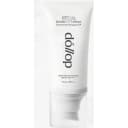
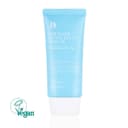
This page is part of Gloshell’s Coupang Partners activity, and Gloshell receives a set commission on purchases made through it.



What the ingredients say
Read from the label order, stated amounts and each ingredient’s clinical evidence
Niacinamide, with clinical evidence for dark spots·oiliness, is in, likely at the amount studies used.
Asiaticoside, which the product is named after, is present at only 0.00004%.
Madecassic Acid, which the product is named after, is present at only 0.000036%.
For a sunscreen, daily use itself has the strongest evidence against spots and lines.
- 1 essential oil
- 3 labelled fragrance allergens
MFDS functional cosmetic filing
Filed with Korea's MFDS as a UV protection functional cosmetic (2022-02). A reviewed product combined with an item the MFDS notice names.
SPF50+ · PA++++
Best-supported ingredient per concern
- Dark spotsNiacinamideevidence Blikely enough
- OilinessNiacinamideevidence B-likely enough
- Skin barrierNiacinamideevidence B-likely enough
- BlemishesNiacinamideevidence B-likely enough
- PoresNiacinamideevidence Clikely enough
- LinesNiacinamideevidence Clikely enough
Evidence-graded ingredients and how much is in
No amount is stated. Judging by 254 products that state it at this place on the label, the chance it reaches the amount studies used is about 93%.
Dark spots B · Oiliness B- · Skin barrier B- · Blemishes B- · Pores C · Lines C
No amount is stated. Judging by 155 products that state it at this place on the label, the chance it reaches the amount studies used is about 59%.
Skin barrier B+ · Dryness C
No amount is stated. Judging by 7 products that state it at this place on the label, the chance it reaches the amount studies used is about 50%.
Lines B-
It comes after a preservative the law caps at 2%, so it is at most 2% — short of what studies used (3–10%).
Dryness B+ · Skin barrier B
The label states 0.00004% — under a hundredth of what studies used (about 0.1%).
Skin barrier C
2 more evidence-graded ingredients
The label states 0.00000001% — under a hundredth of what studies used (about 0.1%).
Skin barrier C · Lines D
No amount is stated. Judging by 80 products that state it at this place on the label, the chance it reaches the amount studies used is about 0%.
Lines D
Amounts on the label
- Melaleuca Alternifolia (Tea Tree) Leaf Extract1%1% or more
- Asiaticosidein the name0.00004%trace (under 0.1%)
- Madecassic Acidin the name0.000036%trace (under 0.1%)
- Asiatic Acidin the name0.000024%trace (under 0.1%)
- Centella Asiatica Extractin the name0.00002%trace (under 0.1%)
- Artemisia Capillaris Extract0.0000001%trace (under 0.1%)
- Madecassosidein the name0.00000001%trace (under 0.1%)
Korean law requires a product to state the amount of any ingredient in its name.
How this was read
Labels list ingredients above 1% from most to least, then those at 1% or less in any order. A product filed with Korea's MFDS as functional is read as holding the notified amount of its efficacy ingredient when the label carries only one for that effect, and anything listed before an ingredient of known amount as holding at least that much. Amounts in the product name or official description are used only where the label order allows them. Where no amount is stated, the chance of reaching the study amount comes from other products that state the same ingredient at the same place on their labels. Evidence grades were set by reading each ingredient's studies.
- A
- several randomised trials or a meta-analysis
- B
- one or two randomised trials
- C
- uncontrolled or multi-ingredient studies
- D
- lab work or a record only
A reading of ingredient evidence and the label, not a guarantee that this product works.
Ingredients
Full ingredient list as published on the official product page, in descending order of content.
All 55 ingredients at a glance
Colours follow each ingredient’s use (CosIng functions); the bar counts names. Not amounts, not a safety score.
Aqua, Dibutyl Adipate, Diethylhexyl Butamido Triazone, C12-15 Alkyl Benzoate, Dicaprylyl Carbonate, Propanediol, Butylene Glycol, Polyglyceryl-3 Methylglucose Distearate, Niacinamide, Terephthalylidene Dicamphor Sulfonic Acid, 1,2-Hexanediol, Diethylamino Hydroxybenzoyl Hexyl Benzoate, Silica, BIS-Ethylhexyloxyphenol Methoxyphenyl Triazine, Rhus Succedanea Fruit WAX, Ethylhexyl Triazone, Tromethamine, Melaleuca Alternifolia (Tea Tree) Leaf Extract1 %, Centella Asiatica Extract201 ppb, Artemisia Capillaris Extract1 ppb, Asiaticoside400 ppb, Madecassic Acid360 ppb, Asiatic Acid240 ppb, Madecassoside0.1 ppb, Trehalose, Panthenol, Hydrolyzed Hyaluronic Acid, Aloe Barbadensis Leaf Extract, Sodium Palmitoyl Proline, Nymphaea Alba Flower Extract, Copernicia Cerifera (Carnauba) Wax, Potassium Cetyl Phosphate, Cetearyl Alcohol, Behenyl Alcohol, Coco-Caprylate/Caprate, Glyceryl Stearate, Polyacrylate Crosspolymer-6, Estimated 1% or less from hereCarbomer, Lavandula Angustifolia OIL, Synthetic WAX, Dibutyl Lauroyl Glutamide, Dextrin Palmitate, Polyurethane-1, Sodium Stearoxy PG-Hydroxyethylcellulose Sulfonate, Trihydroxystearin, Oryza Sativa (Rice) Bran Wax, Ethylhexylglycerin, Adenosine, Tocopherol, Dipropylene Glycol, Glycerin, Portulaca Oleracea Water, Linalool⁎, Geraniol⁎, Limonene⁎
Tap a name to see what it does and the evidence